Global Leader in Combustion Technology Since 1922 | Find a Distributor

RielloPro Combustion Technology

Since the 1960s, our R&D programs in flame geometry, fuel atomization, and emissions control have produced combustion systems tested against EN 676 and EN 267 standards. The current generation (2019 platform) achieves combustion efficiency above 95% with NOx emissions below 80 mg/kWh.

Core Technology

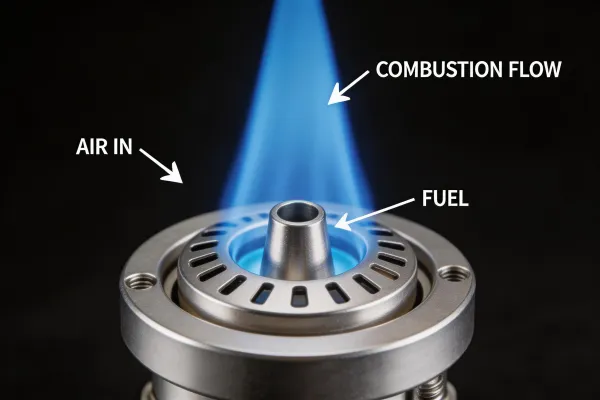
Precision Flame Control

Our proprietary combustion head design optimizes the air-fuel mixture across the entire modulation range. The result: stable flame geometry from 20% to 100% load with combustion efficiency consistently above 95%.

Key technical features include progressive air damper control, fuel staging for low-NOx operation, and flame monitoring with UV sensors and ionization probes for fail-safe shutdown.

Parameter Specification
Combustion Efficiency > 95%
Modulation Range 5:1 (20% to 100%)
NOx Emissions (Class 3) < 80 mg/kWh
CO Emissions < 15 ppm
Oil Burner Technology

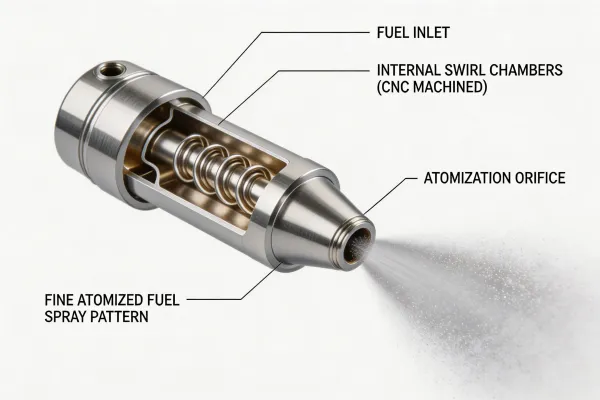
Advanced Fuel Atomization

Effective oil combustion depends on breaking the fuel into a fine mist before ignition. Our pressure-jet and return-flow nozzle systems achieve droplet sizes below 40 microns, ensuring complete combustion with minimal unburned residue.

The pre-heating system maintains optimal fuel viscosity across ambient temperature ranges from -20°C to +50°C, enabling reliable cold-start performance in extreme climates.

Digital Controls

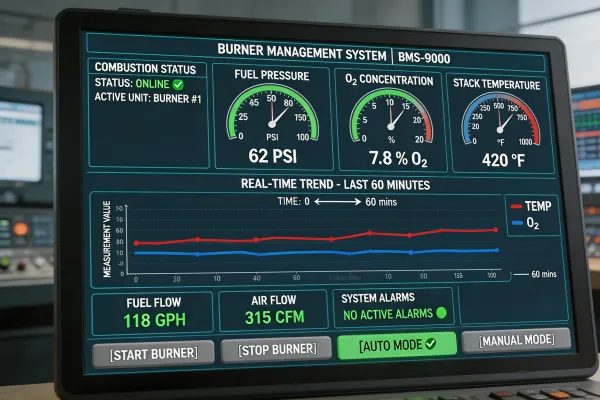
Intelligent Burner Management

Our digital burner management system integrates flame supervision, modulation control, and safety interlocks into a unified controller. Real-time data logging tracks combustion parameters including O2 levels, flue gas temperature, and fuel consumption.

BMS connectivity via Modbus RTU/TCP and BACnet allows integration with building automation systems for centralized monitoring and energy optimization across multi-boiler installations.

Engineering Selection Considerations

Informed equipment selection requires evaluating trade-offs specific to your application, budget, and operational profile

Gas Burners vs. Oil Burners: Fuel Selection Trade-Offs

The choice between gas-fired and oil-fired combustion depends on fuel availability, cost structure, and emission requirements. Natural gas burners produce lower NOx and particulate emissions, require less maintenance (no nozzle fouling or fuel filter changes), and integrate easily with condensing flue gas heat recovery. However, gas infrastructure is not available in all regions, and natural gas prices can be volatile in markets without long-term supply contracts.

Oil burners offer fuel supply independence — diesel or light fuel oil can be stored on-site, providing security for critical installations. Heavy fuel oil (HFO) remains cost-effective for high-capacity industrial applications above 5,000 kW, though it demands more intensive maintenance and additional flue gas treatment to meet emission limits. Dual-fuel systems bridge this gap but add 15-25% to initial capital cost.

Hydrogen Blending vs. Conventional Combustion: Transition Pathways

The energy transition is pushing the heating industry toward decarbonization, but the pathway remains contested. Hydrogen-blended combustion (currently viable up to 20% H2 by volume in most burner designs) offers a retrofit-compatible route that preserves existing boiler assets. However, higher hydrogen concentrations require redesigned combustion heads due to hydrogen's faster flame speed (3.28 m/s vs. 0.4 m/s for methane) and wider flammability range (4-75% vs. 5-15% for methane).

Electrification via heat pumps is the alternative pathway, offering COP values of 3.0-4.5 and eliminating on-site combustion entirely. But heat pumps face limitations in high-temperature process heating above 90°C, require significant electrical infrastructure upgrades, and have higher capital costs per kW of thermal output. For many industrial applications, a hybrid approach — heat pump for base load, burner for peak demand — offers the most practical transition path, though it increases system complexity and control integration requirements.

Technical Resources

Engineering documentation and white papers for specifiers and consultants

Low-NOx Combustion Design Guide

Technical overview of flue gas recirculation, staged combustion, and lean premix strategies for achieving ultra-low NOx emissions in industrial burners.

Request Document

Dual-Fuel Switching: Engineering Considerations

Design principles for gas/oil changeover systems, including fuel valve sequencing, purge cycles, and safety interlock requirements per EN 12952.

Request Document

Hydrogen-Ready Burner Technology

Status report on hydrogen blending (up to 20% H2) compatibility testing, flame speed management, and material certification for future-proof burner installations.

Request Document

Discuss Your Technical Requirements

Our combustion engineers can help you select the optimal burner configuration, fuel system design, and emission control strategy for your project.

Contact Our Engineering Team